quality
OEM Pickup Truck Accessories Factory: What Buyers Expect
“OEM factory” is one of the loosest terms in this trade. It is used for a factory that builds to a customer's drawing, for a factory that applies a customer's logo to its own product, and for a trading office that does neither. Buyers who do not separate those three end up paying OEM prices for catalogue goods.
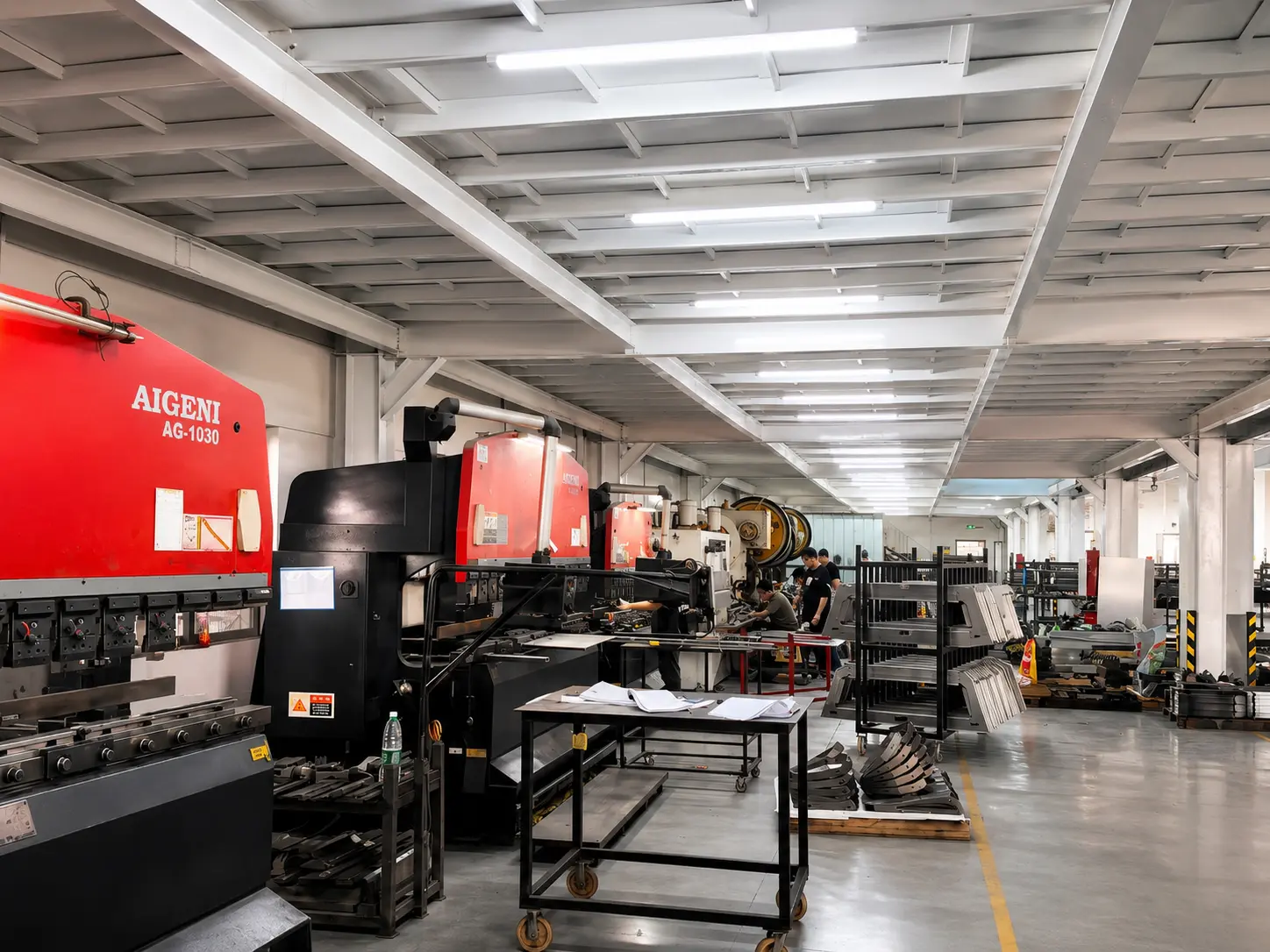
An OEM pickup truck accessories factory should convert a buyer's brief into a controlled, repeatable production plan. That means documented specifications, prototype approval, process control during mass production, and identical output on the second and fifth order, not only on the first sample.
What a real OEM workflow contains
OEM work starts before production. The factory receives a product concept and the target vehicle platforms, then defines the specification: material, thickness, structure, coating, hardware, branding elements and packing. Ambiguity at this stage becomes a deviation at the end of the line, so a competent factory pushes the questions back to the buyer early .
After the specification is locked, the sequence is vehicle data collection, prototype fabrication, trial installation, buyer approval, then tooling and a pilot run. Only after the pilot is signed off does volume production start. Buyers should be able to see which gate their project is at, and who signs it off.
What buyers should insist on before mass production
- A written specification sheet. Dimensions, tolerances, material grade, coating thickness and colour reference, plus the vehicle models the part is validated on.
- Prototype approval in writing. A signed sample is the reference for the whole program; without it, every later dispute becomes an opinion.
- Branding and packaging definition. Logo method (badge, laser mark, print, embroidery on soft goods), label content, master carton specification and barcode requirements.
- Inspection points and acceptance criteria. Incoming material, in-process checks, final inspection and the sampling plan used at each stage.
- Change control. Any material or process change after approval should require written buyer consent, because unannounced substitutions are the most common cause of inconsistent repeat orders.
Where OEM programs usually fail
The failures are rarely about machinery. They are about information: a logo repositioned without notice, a coating supplier swapped for a cheaper one, packing changed to save container space, and a second batch that no longer matches the approved sample. A factory with a documented process can show you the record that prevents this. A factory without one can only promise.
How WINFOR supports OEM programs
WINFOR works with brands and distributors that need private-label pickup accessories. Its published capability set covers product design, vehicle scanning, prototype fitment, fabrication, coating, assembly, inspection, packing and export loading. For buyers starting a program, the practical next step is to send the product category, target vehicle platforms, expected annual volume and branding requirements.
Q1. Does WINFOR support ODM as well as OEM?
A: Its capabilities page lists both OEM/ODM, together with 3D scanning, laboratory work and custom packaging. Yes. WINFOR supports both OEM and ODM services. In addition to manufacturing based on customer-provided designs and specifications, we can also assist with product development, 3D scanning, testing and custom packaging to meet different project requirements.
Q2. Who owns the tooling?
A: Tooling ownership is a commercial term, not a published site fact; confirm it in the quotation. Tooling ownership is determined by the agreement between WINFOR and the customer. For custom tooling, ownership, usage rights and related costs can be clearly specified in the quotation or contract before production begins.
An OEM relationship is defined by what the factory controls: the drawing, the tooling, the process parameters and the inspection record. Ask for those four and the label resolves itself. Where they exist, the premium is justified; where they do not, the correct product is a catalogue item bought at a catalogue price.